Enzyme Supplier for Biogas Production
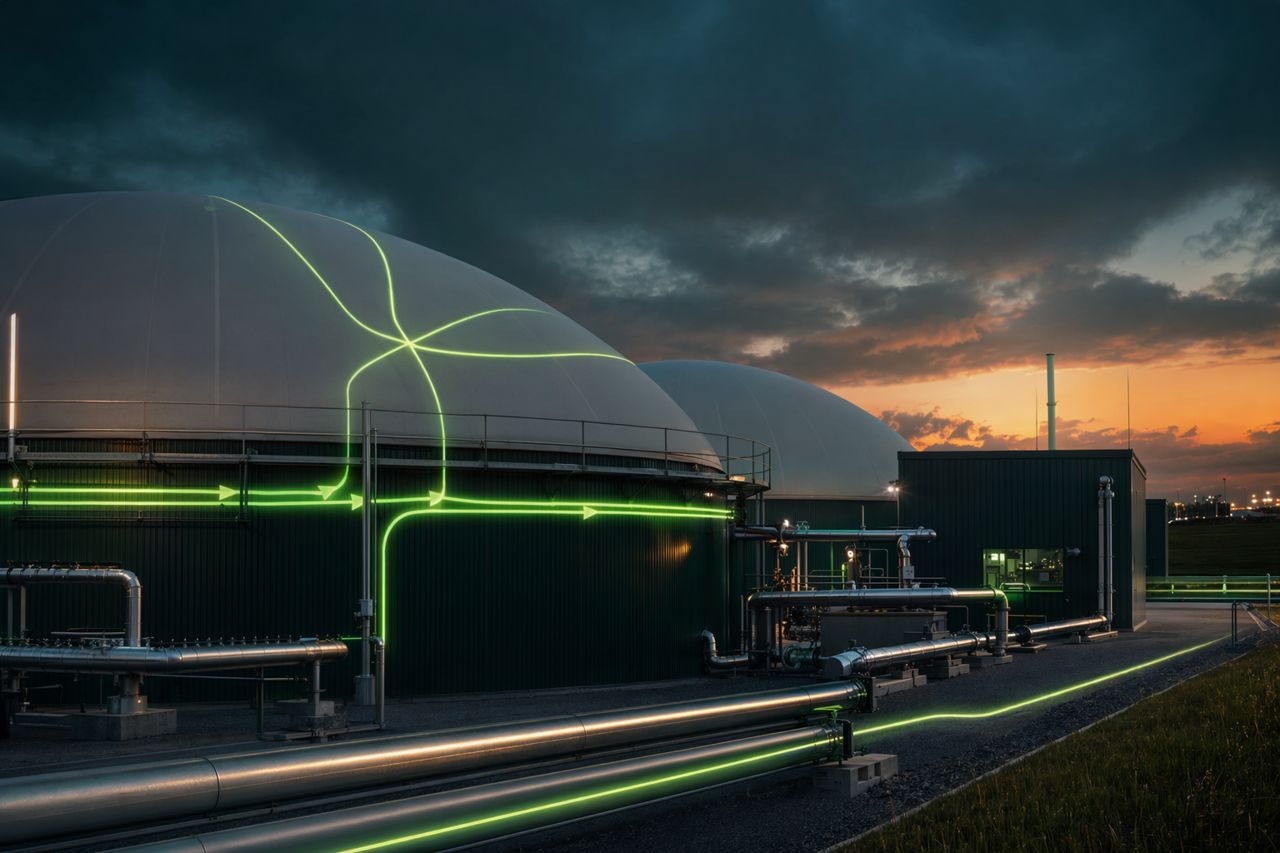
Biogas plants do not operate in laboratory conditions. Feedstock changes, viscosity rises, hydrolysis slows, foam appears, and the digester has to keep producing gas without unnecessary process stress.
AneroShift is an enzyme supplier for biogas production focused on operational fit: faster substrate breakdown, steadier digestion, improved feedstock flexibility, and trial data that plant teams can actually use.
Enzyme solutions built for digester reality
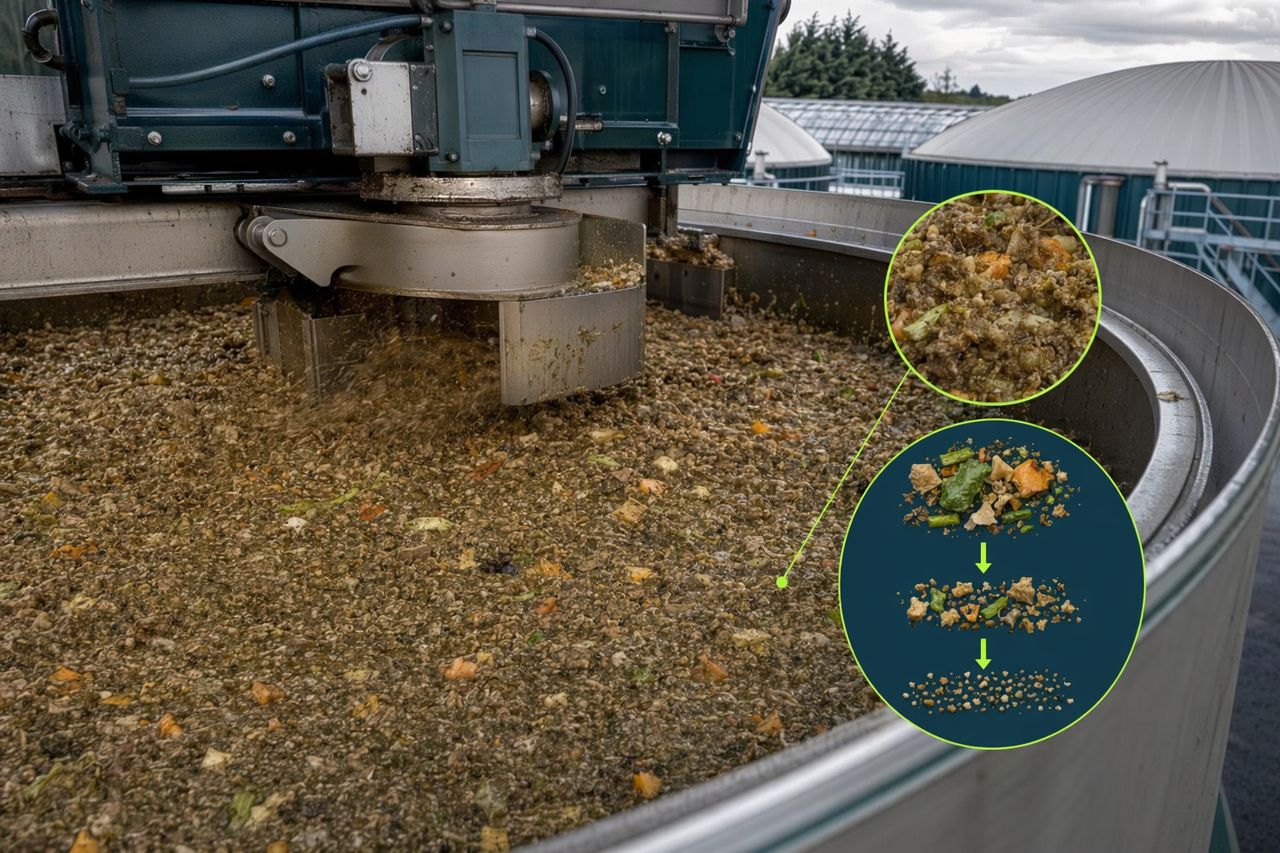
Anaerobic digestion performance is often limited before methanogenesis begins. Fibrous crop residues, food waste fractions, manure solids, fats, proteins, and mixed industrial organics can resist breakdown or enter the digester inconsistently.
AneroShift enzyme solutions are selected to support earlier hydrolysis of complex substrates, helping operators create a more accessible feed profile for downstream microbial conversion.
Our role is practical: supply the right enzyme approach, support dosing logic, and help your team measure whether the change improves the operating window.
Where AneroShift can help
Faster hydrolysis of difficult feedstock
When incoming material contains lignocellulosic fibers, suspended solids, starch-rich waste, protein load, or fat-bearing residues, hydrolysis can become a bottleneck. Enzyme treatment can help break complex material into more available fractions before or during digestion.
Operational value can include:
- Better conversion of fibrous and particulate substrates
- Reduced undigested residual load
- Smoother feedstock integration after recipe changes
- More predictable response from mixed organic inputs
Methane-focused process support
AneroShift does not sell enzymes as a vague additive. We supply enzyme solutions with methane performance in mind, while keeping plant stability central.
Typical trial targets may include:
- Gas uplift versus a clear baseline
- More consistent daily gas production
- Lower process stress during feedstock variability
- Better use of high-solids or harder-to-digest inputs
- Improved economic return from existing digester volume
Viscosity, mixing, and foam management
High viscosity can make a digester harder to mix, pump, and stabilize. When organic solids remain locked in larger structures, the process can become physically stressed before biological conversion has a fair chance.
AneroShift enzyme programs may support:
- Reduced slurry thickness where feedstock chemistry allows
- Improved mixing behavior
- Lower risk of floating layers and dead zones
- More stable feeding patterns
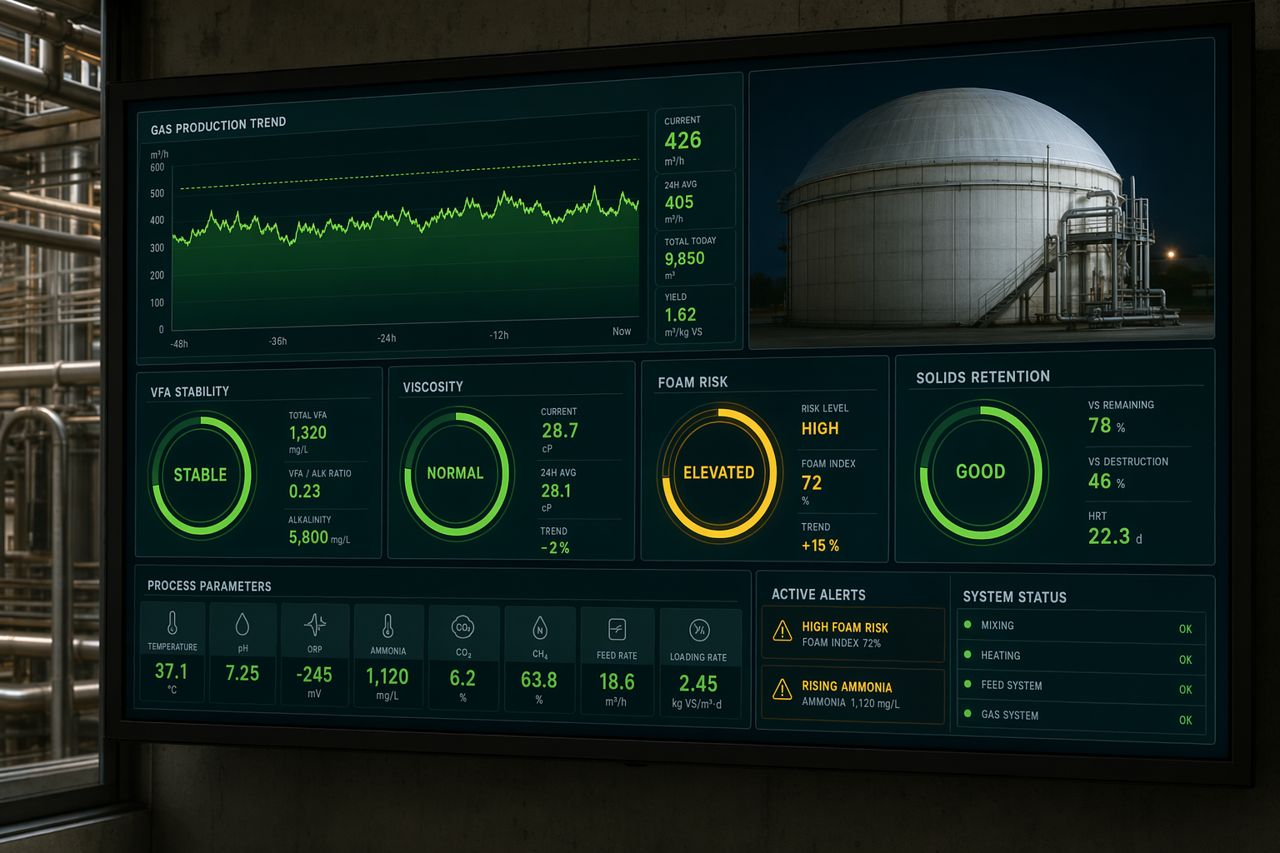
- Better control of foaming pressure linked to poorly managed substrate breakdown
Enzymes are not a replacement for good plant control. They are a tool to reduce avoidable stress inside that control strategy.
Designed for biogas plant trial work
AneroShift supports structured plant trials because enzyme value should be visible in operating data, not assumed.
A typical trial protocol can define:
- Current feedstock mix, loading pattern, and known constraints
- Baseline gas output, VFA behavior, pH trend, foam events, viscosity indicators, and digestate observations
- Enzyme application point and dosing approach
- Trial period with consistent reporting intervals
- Comparison against baseline and operational cost impact
- Decision criteria for scale-up, adjustment, or discontinuation
This gives operations managers, plant owners, and technical buyers a shared view of whether the enzyme program is creating measurable value.
Feedstock applications
AneroShift can support enzyme selection for biogas plants processing:
- Manure and agricultural residues
- Maize silage and crop co-products
- Food waste and packaged organic residues after depackaging
- Fats, oils, and grease blends when managed carefully
- Brewery, distillery, and beverage process residues
- Slaughterhouse and rendering-adjacent organic streams
- Municipal and industrial organic waste mixtures
Every feedstock profile is different. We review substrate type, inhibition risks, mixing limits, retention strategy, and current operating pain points before recommending an enzyme route.
Why work with AneroShift
- Plant-aware technical discussion, not generic additive selling
- Enzyme selection based on substrate challenge and process goal
- Practical guidance for application point and trial design
- Focus on gas yield, stability, viscosity, foam pressure, and retention performance
- Commercial supply support for ongoing plant operation
If your plant is evaluating an enzyme supplier for biogas production, AneroShift can help you move from general interest to a clear, measurable plant trial.
Request a quote
Tell us about your feedstock mix, digester type, operating constraints, and target outcome. AneroShift will review the application and respond with a suitable enzyme supply recommendation and quote.