Enzyme support for steadier biogas production
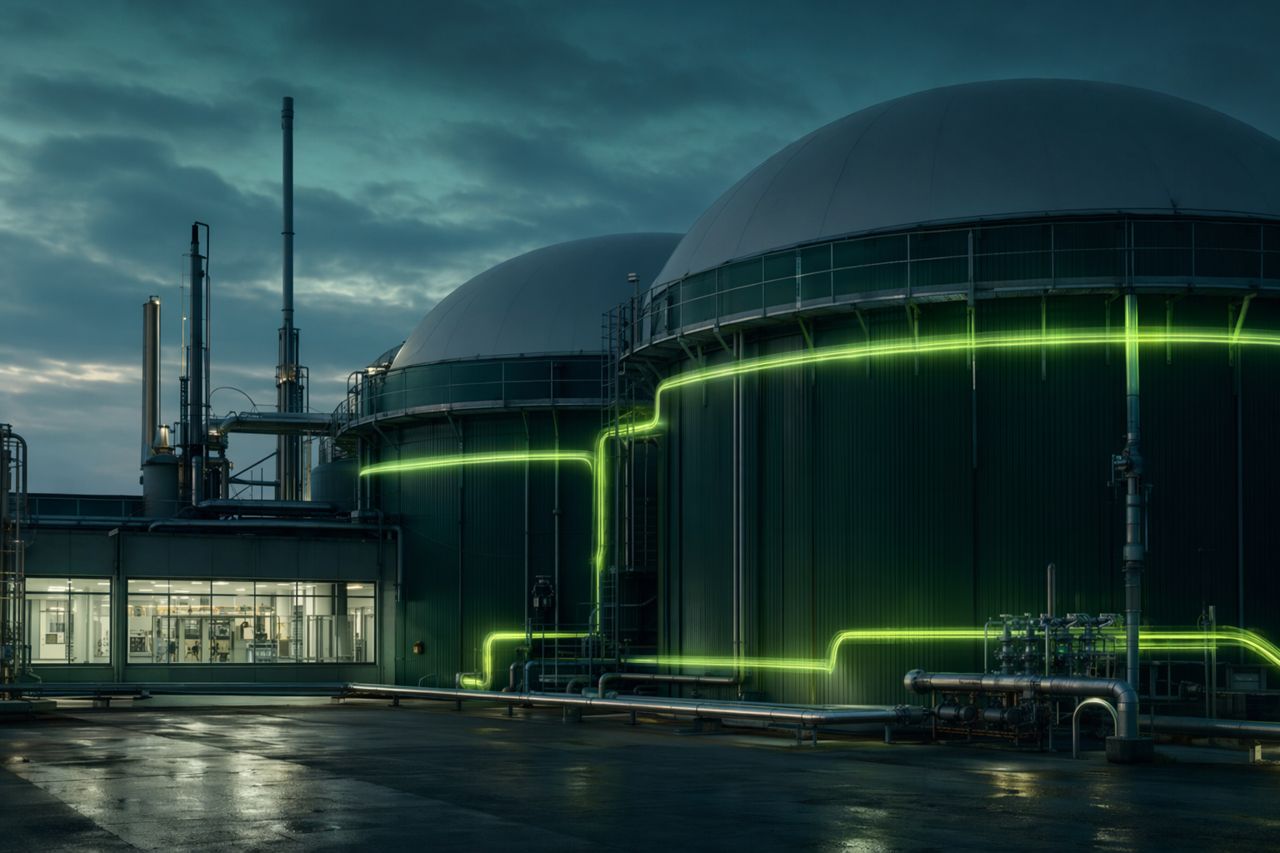
AneroShift is an enzyme supplier for biogas production focused on practical plant outcomes: faster substrate breakdown, more stable digestion, improved methane potential, lower viscosity pressure, and clearer trial decisions.
We work with biogas operators processing farm residues, manure, crop silage, food waste, fats, proteins, and mixed industrial organics. When feedstock quality changes, the digester usually feels it first through foaming, volatile fatty acid movement, mixing load, retention time pressure, or gas variability. Our role is to help your team apply enzyme pretreatment in a controlled, measurable way.
Built for real digester conditions
Enzymes can help release fermentable material earlier in the process, but the value depends on substrate mix, loading pattern, temperature window, retention time, and process limits. AneroShift does not sell one-size-fits-all additives. We help define where enzymes can support the biology and where operational changes should come first.
Targeted enzyme categories
- Cellulase for fibrous plant material, silage, straw, crop residues, and cellulose-rich feedstocks
- Xylanase for hemicellulose-heavy biomass and plant cell wall disruption
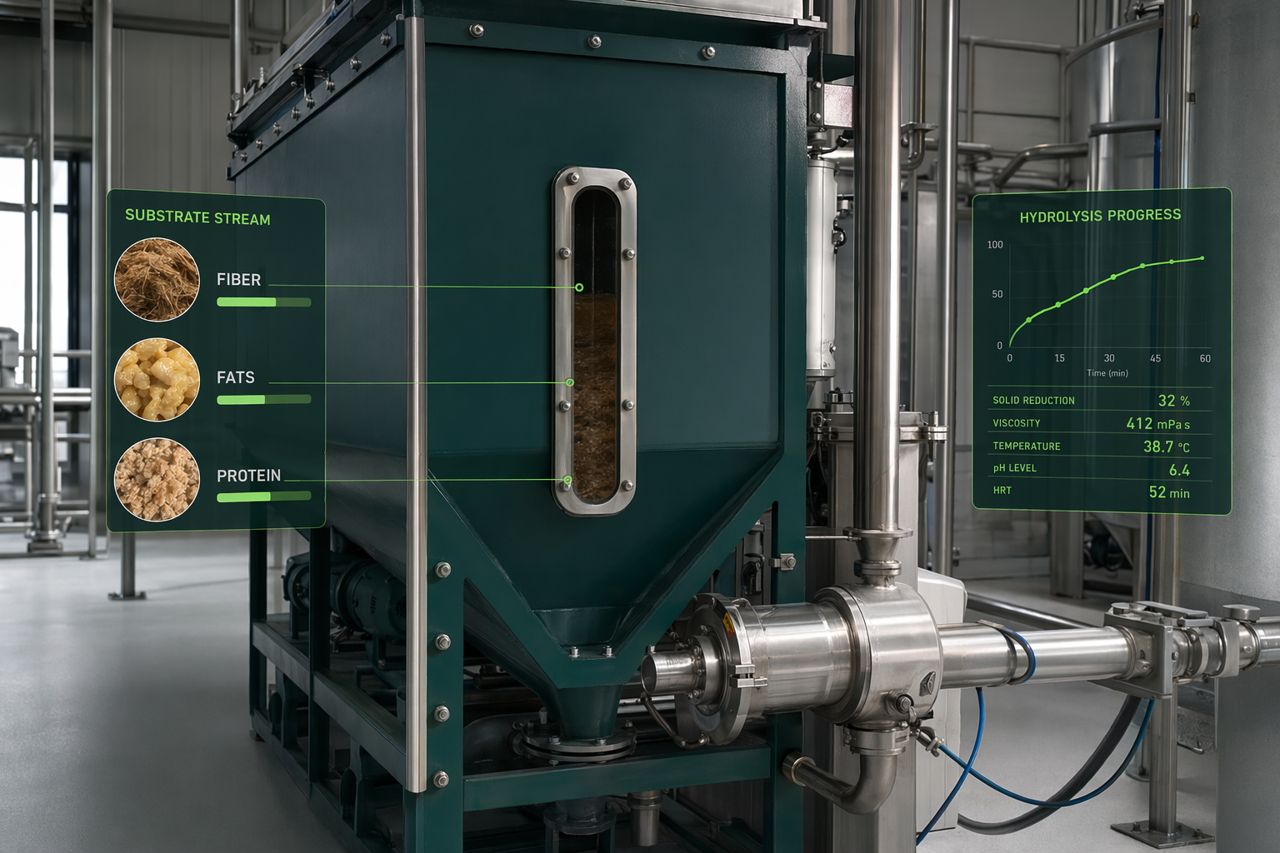
- Lipase for fat-rich substrates where grease handling, hydrolysis, and foaming risk need control
- Protease for protein-heavy streams that require managed breakdown without creating avoidable process stress
- Custom blends for plants receiving variable co-digestion feedstocks
What operators usually ask us to improve
More predictable methane output
When difficult substrates enter the reception or pretreatment stage, incomplete hydrolysis can leave gas potential underused. Enzyme pretreatment can support earlier release of accessible organics, helping the digester convert more consistently.
Lower viscosity and easier handling
Fibrous or thick feedstocks can increase pumping and mixing load. The right enzyme approach may reduce substrate structure before digestion, improving flow behavior and helping operators protect installed equipment.
Better VFA behavior and process stability
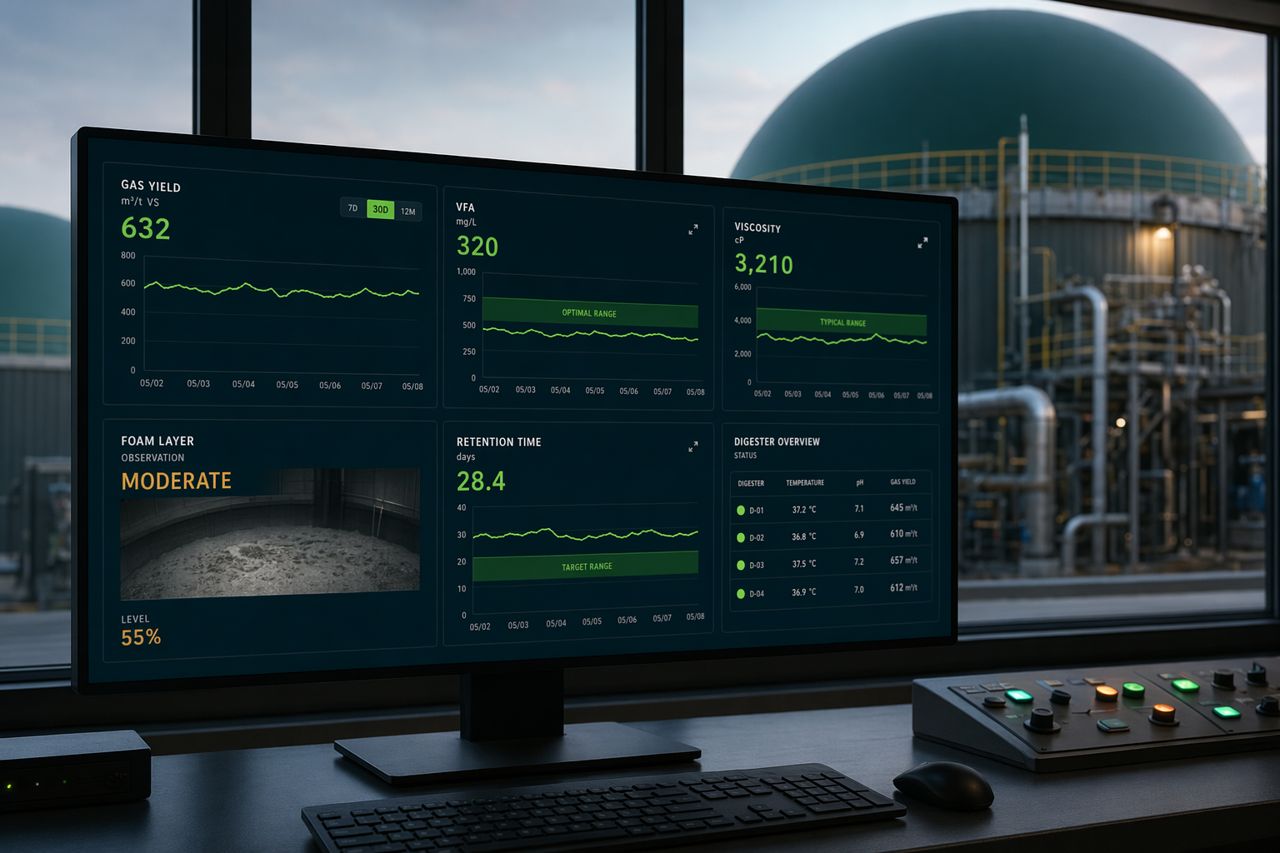
Rapid loading shifts can create stress. We help design enzyme trials around stable operation, not just peak gas numbers, so your team can judge performance against volatile fatty acid trends, alkalinity balance, foam events, and retention time constraints.
Foam and scum risk management
Fat, protein, and fibrous material can contribute to foam and floating layers. Enzymes are not a substitute for good feedstock control, but they can be part of a disciplined program when the substrate profile supports it.
A practical trial protocol before bulk supply
AneroShift supports B2B trials with clear operating rules. Before recommending ongoing supply, we help define:
- Baseline period using recent gas, feedstock, and stability data
- Substrate pressure points such as fiber, grease, protein, viscosity, or retention time
- Enzyme selection matched to the actual feedstock challenge
- Dosing steps that fit plant handling and safety procedures
- Sampling plan for gas output, VFA trend, pH, foam observations, mixing behavior, and solids handling
- Decision criteria for continuation, adjustment, or stop
- Supply plan for pilot, scale-up, and regular production demand
This gives operations managers a cleaner way to evaluate enzyme value without disrupting plant control.
Why AneroShift
- Plant-aware technical support for anaerobic digestion conditions
- Enzyme recommendations based on feedstock behavior, not generic claims
- Guidance for cellulase, xylanase, lipase, protease, and blended approaches
- Trial design focused on measurable plant KPIs
- Supply options for pilot validation and bulk production use
- Direct communication for operations, procurement, and technical teams
Where enzymes fit in the process
Most projects start at reception, maceration, mixing, or heated pretreatment where enzymes can contact the substrate before full digestion. The best location depends on residence time, temperature, mixing intensity, tank access, and the target feedstock stream.
AneroShift helps your team choose a practical addition point and avoid creating new handling complexity.
Request a quote
Tell us your feedstock mix, digester type, current challenge, monthly consumption estimate, and trial goals. We will respond with a practical enzyme recommendation, trial outline, and supply quote for your plant.