Lipase and Protease Support for Mixed Farm and Food-Waste Digesters
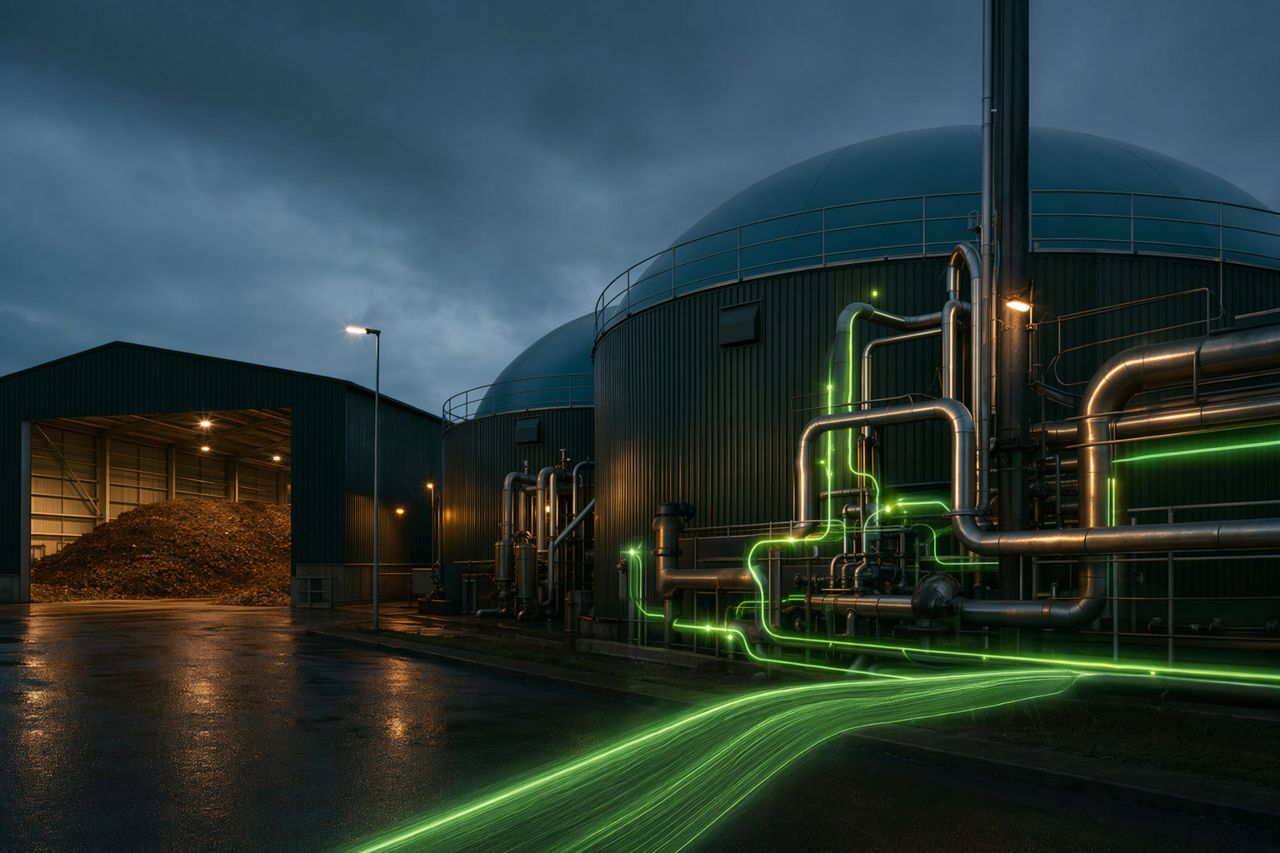
Mixed farm and food-waste digesters rarely see the same substrate twice. Fats, oils, grease, slaughter residues, dairy waste, crop residues, manure, packaged food residues, and variable protein loads can all enter the same reception system within a short operating window.
That variability creates pressure inside the digester: slower hydrolysis, changing viscosity, foam risk, rising volatile fatty acids, and uneven methane output.
AneroShift supplies lipase and protease enzyme solutions for biogas plants that need more controlled breakdown of fat-rich and protein-rich organic streams. If you are looking for an enzyme supplier for biogas production with practical plant-level trial support, we help you evaluate enzyme use against real operating data, not assumptions.
Built for digesters handling inconsistent organic loads
Lipase and protease enzymes are used to support the first limiting step in many mixed-waste digesters: hydrolysis.
- Lipase helps break down fats, oils, grease, and lipid-rich residues into more accessible compounds.
- Protease helps break down proteins from food waste, agricultural by-products, slaughter waste, dairy residues, and other nitrogen-containing streams.
- Used together, they can help improve substrate accessibility before and during anaerobic digestion.
For operators, the target is not enzyme use for its own sake. The target is steadier conversion, less process stress, and a measurable improvement in biogas plant performance.
Where lipase and protease can create operating value
1. Faster hydrolysis of difficult feedstocks
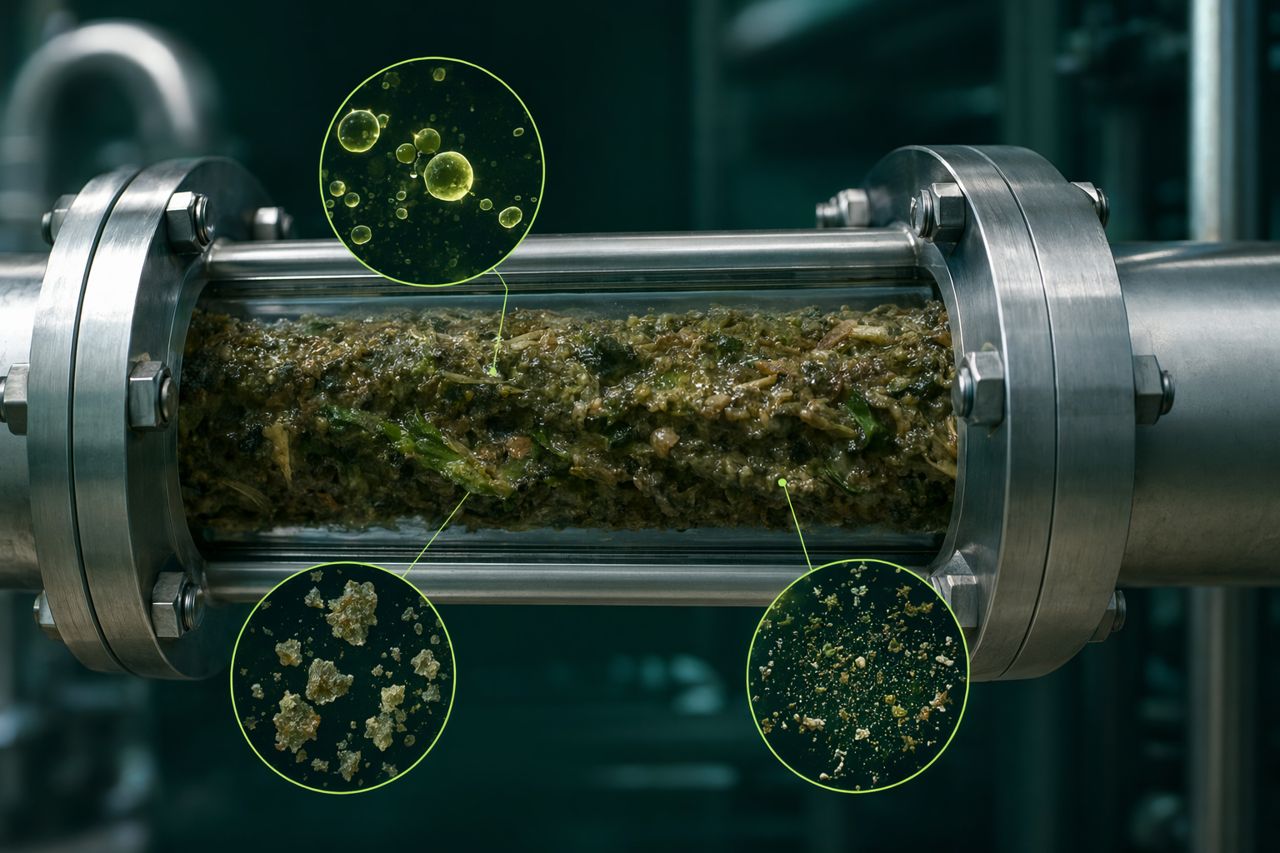
Fat-rich and protein-rich materials can carry strong methane potential, but they can also digest slowly or unevenly. When hydrolysis becomes a bottleneck, downstream biology receives substrate in pulses rather than a controlled flow.
AneroShift enzyme programs are designed to improve early-stage breakdown so the digester receives a more manageable organic load profile.
Potential plant-level benefits include:
- Improved availability of lipids and proteins for microbial conversion
- Better use of high-energy food and farm residues
- Reduced accumulation of partially degraded organics
- More predictable response after feedstock changes
2. Methane uplift from high-energy waste streams
Food waste and farm residues often contain valuable gas potential, especially when fat and protein fractions are significant. The challenge is accessing that potential without overloading the digester.
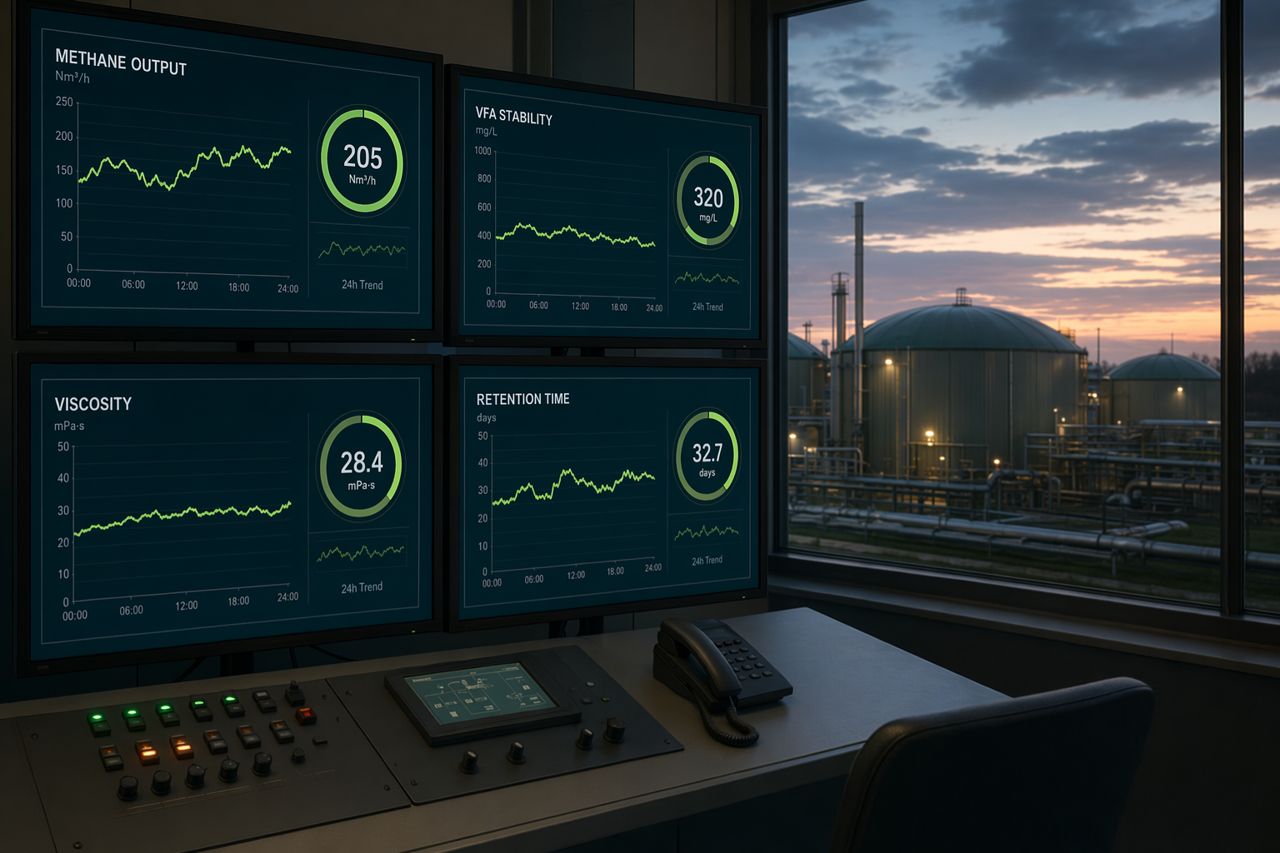
A lipase-protease strategy can support methane uplift by improving substrate release and reducing the lag between feedstock input and gas response. AneroShift helps plants assess this through controlled trials using baseline gas production, feedstock composition, organic loading, retention time, and stability indicators.
3. Improved VFA stability under variable feeding
Rapidly changing feedstock can increase acid formation faster than the system can convert it. This is a common issue when food-waste loads vary by supplier, season, collection route, or pre-treatment quality.
The right enzyme approach does not replace biological control. It supports a more even hydrolysis profile, helping operators avoid sharp substrate availability swings that may contribute to VFA stress.
4. Viscosity and mixing support
Thick slurries, lipid films, protein-heavy loads, and uneven solids distribution can affect mixing efficiency and mass transfer. Enzyme-supported breakdown can help reduce structural resistance in some feedstocks, supporting better pumpability, blending, and contact between substrate and microbes.
This can be especially relevant where plants see:
- Thick food-waste slurries
- Manure and food-waste co-digestion
- High fat, oil, and grease input
- Floating layers or scum tendencies
- Reduced effective mixing in tanks or pre-treatment systems
5. Foam and process stress management
Foam risk is often linked to multiple factors: feedstock quality, surfactants, fats, proteins, trace nutrient balance, loading rate, and microbial condition. Enzymes are not a universal foam treatment, but targeted lipase and protease use can be part of a broader approach where undigested fat and protein fractions are contributing to instability.
AneroShift evaluates enzyme fit through a plant-aware lens: what is being fed, how the digester is responding, and what operational change is realistic.
Typical biogas plant applications
AneroShift lipase and protease programs are suitable for facilities processing:
- Source-separated food waste
- Mixed commercial organic waste
- Farm manure with food-waste co-substrates
- Dairy waste and whey-containing streams
- Slaughterhouse and rendering residues
- Fats, oils, and grease blends
- Crop residues with protein-rich by-products
- Packaged food waste after depackaging
- Municipal organic fractions with variable composition
How AneroShift supports a measurable enzyme trial
We do not recommend vague dosing and waiting for a result. Biogas plants need a trial structure that separates enzyme impact from normal feedstock variation.
Trial planning includes
- Review of feedstock profile and variability
- Identification of hydrolysis bottlenecks and instability points
- Baseline review of gas production and methane concentration
- Tracking of VFA trend, alkalinity relationship, pH, foam events, viscosity, and digestate observations where available
- Definition of trial period, control period, and evaluation markers
- Adjustment guidance based on actual plant response
Practical evaluation markers
AneroShift trials can be assessed against operational outcomes such as:
- Methane yield trend versus comparable baseline
- Gas response after high-fat or high-protein loads
- VFA stability during feedstock changes
- Mixing, pumping, or viscosity observations
- Foam event frequency or severity
- Retention time pressure and organic loading flexibility
- Digestate consistency and residual organics indicators where measured
Why work with AneroShift
AneroShift is an enzyme supplier for biogas production focused on plant realities: variable substrates, tight margins, biological risk, and the need to prove value before scaling.
You get:
- Enzyme selection matched to fat and protein load characteristics
- Support for mixed farm and food-waste digestion conditions
- Practical guidance for reception, pre-treatment, or digester-stage use
- Trial protocols designed around measurable plant KPIs
- Clear communication for operations teams, technical managers, and procurement
Request a quote
Tell us what your plant is processing, where the bottleneck appears, and what outcome you want to measure. AneroShift will respond with a practical enzyme recommendation and quote pathway for your biogas operation.
Request a quote using the on-site contact form.