Enzyme for Biogas Yield Improvement
Biogas plants rarely operate on a perfect feedstock profile. Silage quality shifts. Manure solids change. Food waste loads arrive with different fat, starch, protein, and fiber fractions. When hydrolysis becomes the bottleneck, the digester sees it first: slower conversion, higher viscosity, floating layers, foam pressure, VFA movement, and missed gas potential.
AneroShift is an enzyme supplier for biogas production focused on practical yield improvement inside real operating plants. Our enzyme solutions are designed to support faster substrate breakdown, smoother digestion, and measurable methane uplift without turning your process into a laboratory project.
Request a quote through our on-site form
Where enzymes create value in biogas production
In anaerobic digestion, complex feedstocks must be broken down before microbes can convert them into biogas. If fiber, starch, protein, or fat-rich particles remain slow to hydrolyze, retention time is used inefficiently and process stress increases.
AneroShift enzyme blends are selected to support targeted hydrolysis of hard-to-access substrate fractions, helping the plant convert more available feedstock into gas under stable operating conditions.
Typical operational targets
- Improve methane yield from existing feedstock inputs
- Accelerate hydrolysis of fibrous and mixed organic substrates
- Reduce viscosity and improve pumpability in high-solids digestion
- Support foam and floating-layer control by improving substrate breakdown
- Stabilize digestion under variable feedstock loading
- Improve retention-time efficiency without forcing aggressive process changes
- Support co-digestion programs with better substrate flexibility
Built for plant realities, not generic enzyme claims
AneroShift works with the way biogas plants are actually run. We look at feedstock mix, digester loading, retention time, temperature profile, mixing behavior, foam history, VFA trend, alkalinity buffer, and gas data before recommending an enzyme approach.
The goal is not to add another variable without control. The goal is to define a monitored enzyme trial that operations can trust.
Feedstock situations where AneroShift is commonly evaluated
- Agricultural biogas plants using maize silage, grass silage, manure, slurry, and crop residues
- Food waste and packaged organic waste digestion where composition changes weekly
- High-fiber feedstocks that show slow breakdown or visible residual solids
- High-solids digesters with pumping, mixing, or viscosity constraints
- Co-digestion plants balancing fat, protein, carbohydrate, and fiber loads
- Plants seeking higher gas output without major mechanical expansion
How AneroShift supports yield improvement
Faster hydrolysis
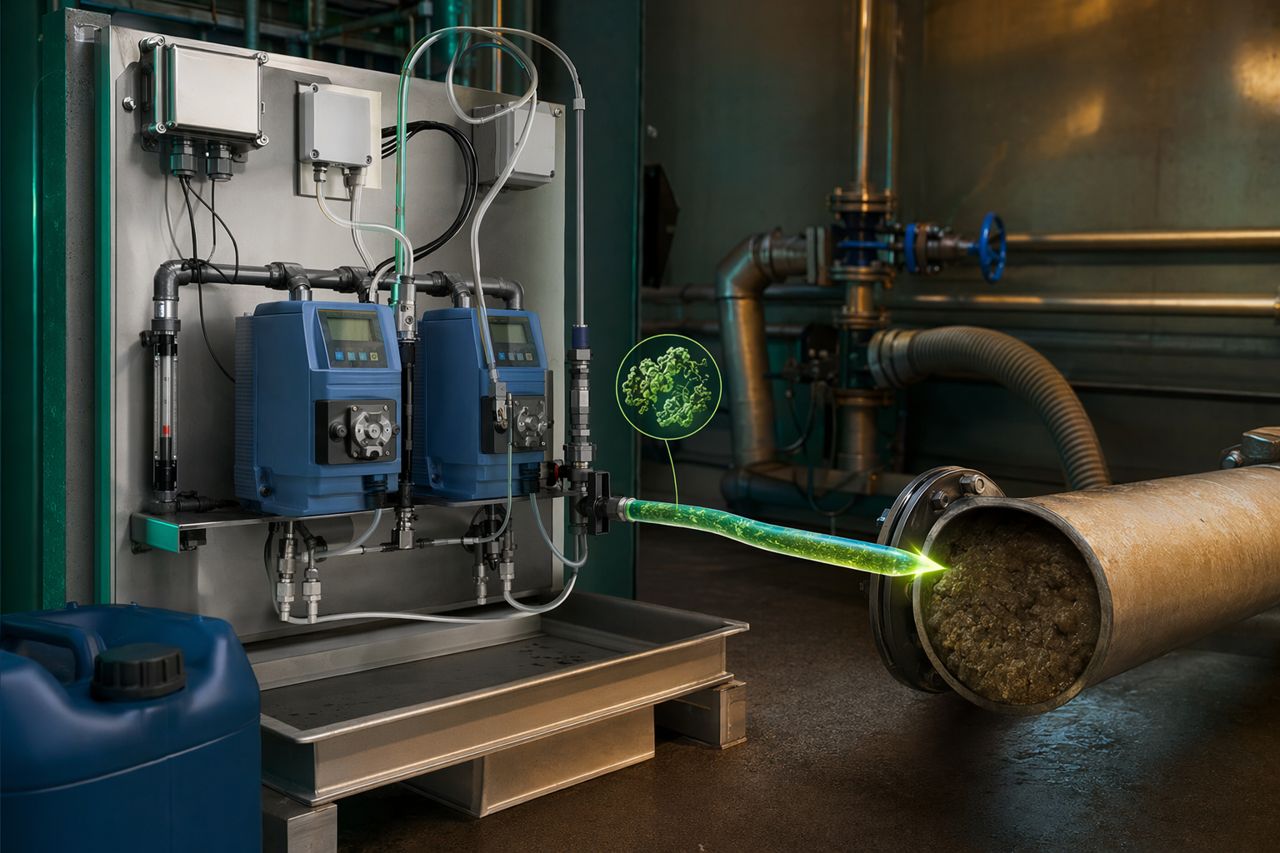
Enzymes support the first conversion step by helping split larger substrate structures into smaller, more accessible fractions. This can increase the rate at which microbes access usable material, especially when fiber-rich or mixed organic inputs slow the process.
Lower process stress
When hydrolysis is smoother, the digester is less exposed to abrupt substrate accumulation and delayed conversion. That can help operations teams manage VFA movement, foam risk, and load transitions with more confidence.
Better use of retention time
Every digester has a fixed volume and a practical retention-time window. Enzyme-assisted breakdown can help the plant extract more value within that window, especially when incoming material is not being fully converted before discharge.
Improved handling of variable feedstock
Feedstock variability is one of the strongest reasons to use enzymes in biogas production. AneroShift helps plants create a consistent biochemical support layer when the feedstock supply is not consistent.
A measurable trial protocol for operations teams
AneroShift recommends a structured plant trial rather than a blind addition. A typical commercial evaluation includes:
- Baseline review — feedstock mix, gas output, methane share, organic loading, retention time, digestate observations, viscosity, foam events, VFA trend, and operating constraints.
- Trial objective — define whether the priority is gas uplift, foam control, viscosity reduction, feedstock flexibility, or process stabilization.
- Dosing plan — establish application point, dosing rhythm, handling requirements, and operator responsibilities.
- Monitoring window — track gas yield, methane content, VFA behavior, foam events, mixing or pumping indicators, and feedstock changes.
- Comparison method — compare against the baseline while adjusting for feedstock and loading changes.
- Scale decision — review performance data and confirm whether full-scale supply is justified.
This approach gives plant managers a clear basis for procurement decisions and avoids vague performance discussions.
Commercial supply for biogas plants
AneroShift supplies enzyme solutions for industrial anaerobic digestion programs, including single-site trials, multi-digester evaluation, and ongoing plant supply. Product selection is based on your feedstock and operating objectives, not a one-size-fits-all label.
What buyers can expect
- Enzyme recommendation matched to substrate profile
- Practical introduction plan for plant staff
- Trial support with defined performance indicators
- Supply options for continuous or campaign-based dosing
- Documentation for procurement and technical review
- Responsive B2B communication from quote to repeat supply
Why choose AneroShift as your enzyme supplier for biogas production
AneroShift is built for operations managers who need stable digesters and measurable output. We focus on practical enzyme use: faster hydrolysis, stronger conversion, lower process friction, and clear trial data.
You bring the feedstock profile and plant targets. We help define the enzyme strategy and supply plan.
Request a quote
Use the on-site request form to share your plant type, feedstock mix, digester volume, current operating target, and whether you are looking for yield improvement, foam reduction, viscosity control, or feedstock flexibility.
Request a quote from AneroShift and we will respond with a practical enzyme supply recommendation for your biogas plant.